How creators make money: 10 ways to monetize your content
Sponsorships, affiliates, courses, memberships, newsletters, community: 10 ways to monetize your content, with data on how many creators actually earn a living.
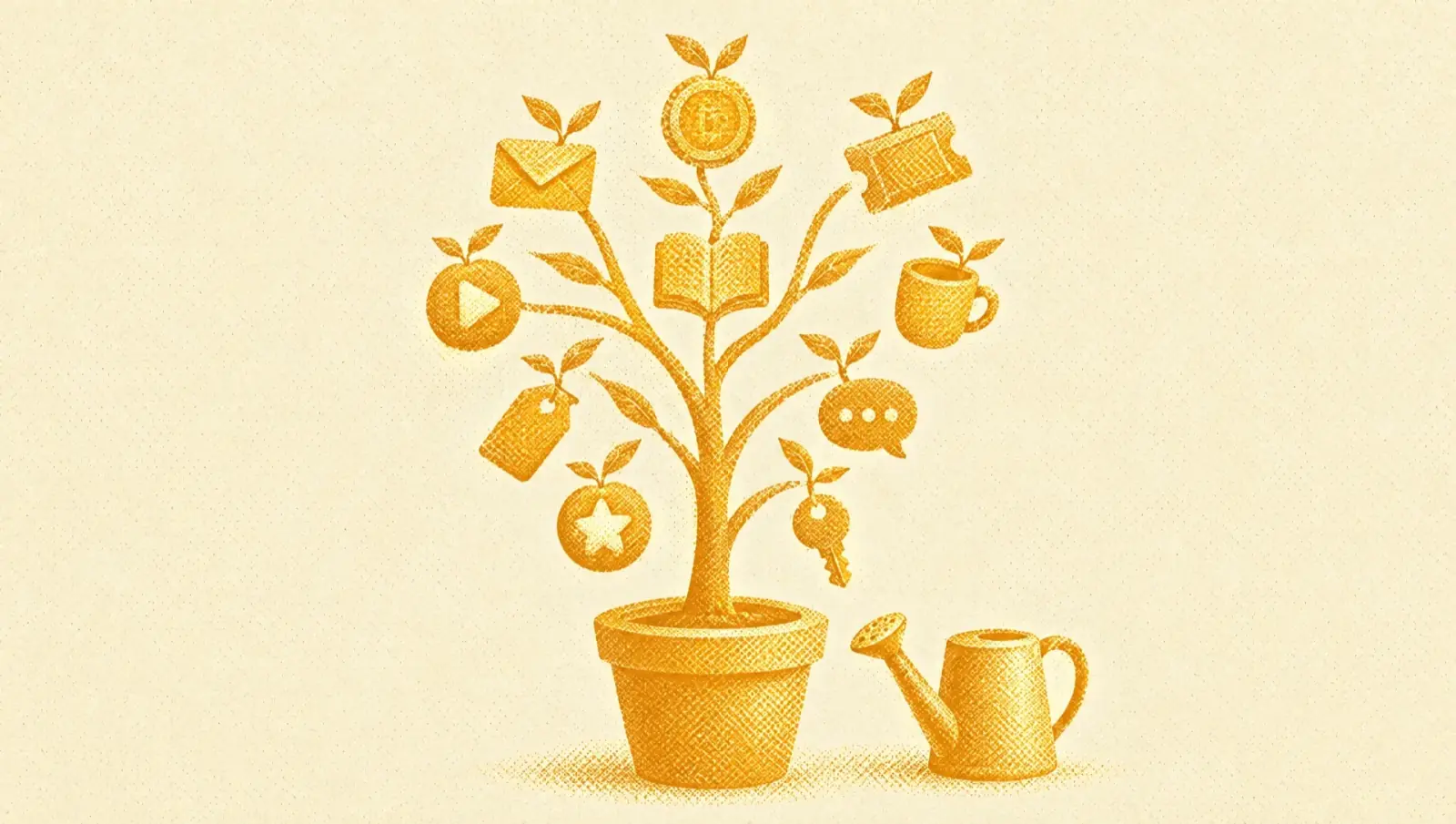
“How do creators make money?” has a long answer, because the honest one is “with several things at once, and not right away”. This guide runs through ten ways, says when each makes sense and what it needs, and starts from a figure that lowers expectations: the people who truly earn are a minority.
How many creators actually earn a living?
In a January 2026 survey of one thousand US creators, 48.7% reported under $10,000 a year, 45.6% between $10,000 and $100,000 and 5.7% over $100,000. Earning from content is possible, but a high income is rare.
See the data as a table
| Income band | Share |
|---|---|
| Under $10,000 | 48.7% |
| $10,000 to $100,000 | 45.6% |
| Over $100,000 | 5.7% |
Read it with care: it is a marketing agency's press release, incomes are self-reported and the sample is American. The same report says product sales and affiliate marketing together make up about 21.2% of creator income, and that 51.5% grew their earnings in 2025 compared with the year before.
On the European side, DeRev estimates Italian influencer marketing at €425 million in 2026, up 10.4% from €385 million, based on about 5,000 profiles analysed between June 2025 and June 2026 (Il Sole 24 Ore). UPA estimates about €550 million, up 12% on 2025 (ItaliaOggi). They are two estimates with different methods: do not add them or compare them as if they measured the same thing.
- DeRev estimate
- 425
- UPA estimate
- 550
What are the ten ways to monetize content?
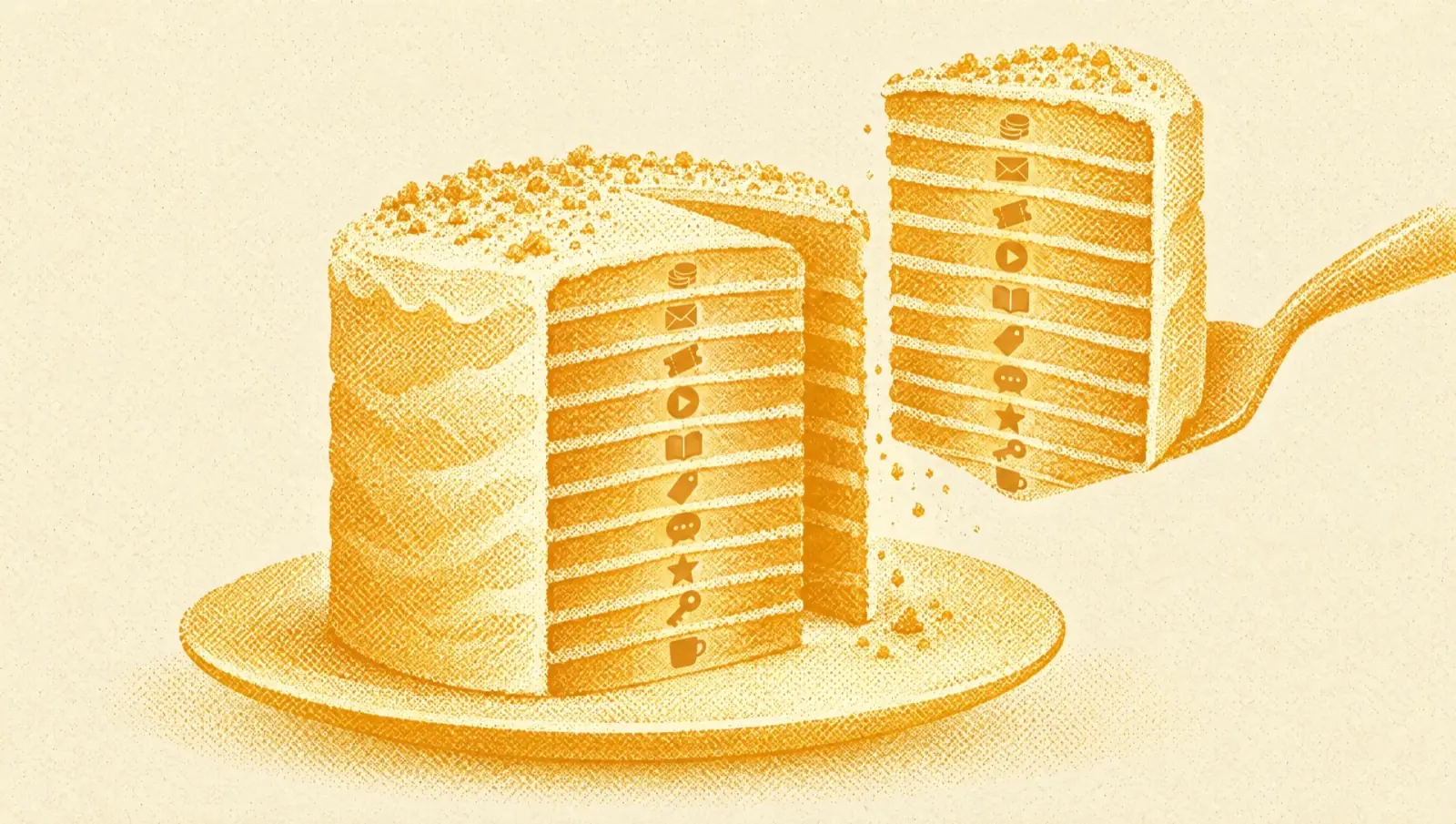
The ten ways are: sponsorships, affiliate links, platform ads, digital products, video courses, memberships, paid newsletters, communities, consulting and licensing. They differ in the audience required, how recurring the income is and how much control you have over it. The ten ways sit on a spectrum from rented to owned. At one end are sponsorships and platform ads, which pay quickly but depend on someone else's budget or rules. At the other end are products, memberships and newsletters, which take months to build but belong to you and can renew every month. Most creators who last mix both ends: rented income pays the bills while they build the owned assets that make the next year less fragile, and each source feeds the others through the same audience.
1. Sponsorships and brand deals
A brand pays you to talk about its product. It is the fastest way to get paid, but every payment is more work and depends on the brand. Rates vary a lot with audience size: according to DeRev, on Instagram a nano creator (under 10,000 followers) usually asks €100 to €300 a post, while a mid-size profile asks €1,600 to €5,500 (Open). How to present yourself and what to charge is in our article on the media kit and rates.
2. Affiliate links
You earn a commission when someone buys through your link. You don't need a product of your own and you can start with few followers, but income stays low if your audience does not trust you. It works best with tools and products you actually use.
3. Platform ads
Platforms share ad revenue with you. The YouTube Partner Program, for example, requires 1,000 subscribers and 4,000 public watch hours in the last 12 months, or 10 million Shorts views in the last 90 days, and review usually takes about a month (YouTube Help). The same page warns that from 1 February 2027 the program changes its terms: check current requirements before you count on it.
4. Digital products
Templates, guides, presets: made once, sold many times. They need an audience that knows you for a specific skill, and they make a good first product before a course.
5. Video courses
A course turns a skill into a higher-value product. It needs production work and an audience willing to pay hundreds. It is also the product most exposed to piracy. If you want to build one, start from the guide to creating and selling an online course and compare the platforms.
6. Memberships
A monthly subscription gives access to content, live sessions or a group. It is the healthiest way to get recurring revenue, but it demands consistency: every month you need a reason for people to stay. Use the membership revenue simulator to estimate the first twelve months.
7. Paid newsletters
Part of your newsletter becomes paid. It works well with niche expertise and an audience that reads. The advantage is that the list is yours: we cover it in creator newsletters.
8. Communities
A private group where people help each other. The value lies in the people, not only in your content, and it needs moderation. It often pairs with a membership.
9. Consulting and services
Selling your time to clients is the simplest way to earn early, but it does not scale: the more you work, the more you earn, until you run out of hours. Many creators use it to fund products that do scale.
10. Content licensing
Your content can be licensed to a brand, a media outlet or a platform. It only works if you know what you are giving up: the subject of a dedicated article on content rights.
Which ways should you pick first?
Start with what needs the least audience and the least investment, and build toward what you control. A common path is consistent content, a few collaborations and affiliates to bring in income, then a digital product or a course, then a membership for recurring revenue.
| A small audience is enough | Recurring revenue | Depends little on platforms and brands | |
|---|---|---|---|
| Sponsorships | Partly | No | No |
| Affiliate links | Yes | Partly | Partly |
| Platform ads | No | Partly | No |
| Digital products | Yes | No | Yes |
| Video courses | Partly | No | Yes |
| Memberships | Partly | Yes | Yes |
| Paid newsletters | Partly | Yes | Yes |
| Communities | Partly | Yes | Yes |
| Consulting | Yes | No | Yes |
| Content licensing | No | No | Partly |
A qualitative assessment by the editors, not a measurement. “A small audience is enough” means you can start with a few hundred or thousand people; “Partly” means it depends on the case.
An example with the membership simulator
To grasp what “recurring revenue” means, use the membership revenue simulator. With the default values (an audience of 2,000, 2% joining at launch, €29 a month, 10 new members a month and 5% leaving each month) you start with 40 members and after twelve months you have about 109, for monthly revenue of about €3,160 and about €26,950 across the year, before fees and tax.
These are a tool's numbers, not forecasts, but they show how churn and new arrivals weigh. With 5% churn you must add new members every month just to stay where you are. Run the same calculation with your own audience and a higher churn and you will see why a membership demands steady content.
What do you need in practice?
As soon as you earn regularly, you need your tax position in order and invoices. In Italy that often means opening a VAT number, and the regime you choose affects the tax you pay. Deal with it early, not after the money has come in: see our guide to the Italian VAT number for creators and talk to an accountant.
You also need rules for collaborations: disclose sponsorships, read contracts, know what you are giving up. If a brand asks for exclusivity or usage rights, check duration and scope before you sign.
What might a twelve-month path look like?
A realistic path, with no promised figures, goes in stages. In the first three months you publish consistently and collect contacts: an email list, even a small one, is worth more than a follower count. Between month three and six the first collaborations and affiliates arrive: you need a media kit and a clear rule on what you accept, as we explain in media kit and rates. Between month six and nine, if your audience asks the same questions again and again, turn them into a product: a guide, a template or a small course. From month nine you can consider a membership, to add recurring revenue. Each step needs your tax paperwork in order: keep it in mind with the guide to the Italian VAT number.
Which mistakes should you avoid?
- Depending on a single source. A platform can change its rules: YouTube's Partner Program changes its terms in 2027, for example.
- Accepting collaborations far from your audience. It shows immediately and costs trust.
- Not writing down what you give up. Rights over content need clarifying before you sign: read content rights.
- Launching without a list. Without a direct line to your audience you start from zero at every launch.
- Ignoring piracy. If you sell a course, think about how to protect it before launch: guide.
How do you choose based on time, audience and risk?
Start with three honest questions: how much time you have each week, how big and precise your audience is and how much risk you can bear. With little time and a small audience, affiliates and consulting give the first income without building anything. With a mid-size audience and a clear skill, a digital product or a small course turns repeated questions into revenue. With a loyal audience and consistency, a membership or a paid newsletter offers steadier income. Risk matters more than it seems. Sponsorships depend on the brand and the platform: if a program changes its terms or a brand cuts its budget, the income disappears. Your own products take months of work before the first sale but stay yours. A simple rule: don't let more than half your revenue depend on a single source, and use quick income to fund the sources that build an asset.
Three sample profiles
- Starting from zero. Few followers, plenty of time. Builds steady content, a contact list and a consulting offer. Goal: first income and the first questions repeated by the audience.
- Already has a mid-size audience. A few thousand people who trust them. Adds a digital product or a small course, and starts negotiating collaborations with a media kit.
- Has a loyal audience and expertise. Considers a membership or a more structured course and protects the work: for courses, video protection is part of the product.
What happens when a platform changes its rules?
It happens often, which is why it pays not to depend on one source. YouTube's Partner Program, for example, states on its help page that from 1 February 2027 it introduces updates and that creators must accept the new terms in YouTube Studio by 31 January 2027 (YouTube Help). The page gives no new thresholds: check it before you plan around ad revenue.
Three habits protect you from rule changes: keep a copy of your content, collect your audience's contacts in a list of your own and spread income across several sources. Read terms of use carefully when they change: they often affect rights and fees, as we explain in content rights.
Key terms. A sponsorship is a payment from a brand for content about its product. An affiliate link is a tracked link that pays a commission on sales. A membership is a recurring subscription that gives access to content or a group.
How we checked this. We ran the membership simulator with its default values and found about 109 members after twelve months. We found the same DeRev market total in Il Sole 24 Ore and in Open. We found no verified Italian data on how many creators earn a living, so we use a US survey and say so. Contact: hi@heytea.app. Editorial note: we fact-check every figure against the sources listed below and correct mistakes openly.
Frequently asked questions
How do creators make money from their content?
Creators make money in ten main ways: sponsorships, affiliate links, platform ad programs, digital products, video courses, memberships, paid newsletters, communities, consulting and content licensing. Almost nobody lives off a single source: those who earn the most combine platform-dependent income with products they control directly.
How many creators actually earn a living?
Few. In a January 2026 survey of one thousand US creators, 48.7% reported under $10,000 a year, 45.6% between $10,000 and $100,000 and 5.7% over $100,000. It is a marketing agency's survey about the United States, not a measurement of the whole world, but it gives the order of magnitude.
How many followers do you need to start making money?
It depends on the source. The YouTube Partner Program requires 1,000 subscribers plus 4,000 public watch hours in the last 12 months or 10 million Shorts views in the last 90 days. For sponsorships, affiliates, courses or consulting there is no threshold: a specific audience and a clear offer matter more than the raw number.
Are sponsorships better than selling your own products?
Sponsorships are the fastest way to get paid, but they depend on a brand and a platform. Your own products, like a video course or a membership, take more work up front and give more control and recurring revenue. That is why many creators start with the first and build the second with the part of the audience that has followed them longest.
Do I need to register as self-employed to earn from content?
Rules differ by country. In Italy, for instance, a habitual and organized activity usually needs a VAT number, while occasional work may fit a simpler regime within limits. Your situation changes the answer, and the rules change over time: read up on your country's rules and ask an accountant before invoicing.
Sources
- The Influencer Marketing Factory, press release on Marketing Dive, 24 February 2026: a survey of 1,000 US creators. An agency source, self-reported data. marketingdive.com
- Il Sole 24 Ore, 2 July 2026, on the DeRev report: Italian market at €425 million. en.ilsole24ore.com
- ItaliaOggi, on UPA's €550 million estimate. italiaoggi.it
- Open, 2 July 2026: fees by profile type, DeRev data. open.online
- YouTube Help, Partner Program requirements. Page with no visible update date. support.google.com